by Levi Armlovich
 I’ve been in Turkey for just over a week now, and what a week it’s been! I got to Izmir, where I’ll be staying for two months and taking language courses, the same night that nation-wide protests began after police violently attempted to disperse a minor environmental protest in Istanbul that morning. The first couple jetlagged nights I was here I saw clouds of tear gas at the end of my street. Once, at about 2am, a group of police officers with clubs in hand walked down my street hunting for protestors, accompanied by a larger group of government supporters armed with bats and pipes. After the mob had passed, several small groups of teenage protestors slipped out of the apartment buildings where they had been hiding and scurried off in the opposite direction. There were reports a few days later that a number of people had been arrested in Izmir for tweeting the location of police patrols like the one I saw that night.
I haven’t seen any signs of fighting now for several days, though, although that may be due to the fact that the jetlag has passed and I’m not waking up in the middle of the night anymore. Every day the main opposition TV channel broadcasts footage from the previous nights’ fighting, and a day or two ago I saw a clip of police clubbing unarmed protestors that was filmed just a couple streets away from where I’m staying.
However, despite the violence on both sides (police officers have also been injured, shops here have been smashed, and in another part of Izmir, protestors burnt down the local headquarters of the ruling AK Party a few nights ago,) my experience has been that the protests have largely been peaceful and festive. Every afternoon a stage is set up, and every evening political speeches are interspersed with live music and dancing. Adults socialize and drink beer, children fly kites, and peddlers hawk everything from Guy Fawkes masks and Turkish flags emblazoned with the portrait of Mustafa Kemal Atatürk, Turkey’s founding father, to toys and women’s clothing.
Many interesting anecdotes have come out of the protests, which have unified opposition to the AK Party in a way that no politician has been able to in the decade that the AK Party has been in power. There was a story a few days ago about a group of ultranationalists (Turkey’s far right and the traditional foes of the Kurdish independence movement) standing by while Kurdish protesters danced traditional Kurdish dances in Taksım Square. The two groups then stood arm-in-arm to form a line opposing a police advance into the square. Today on TV I saw footage of fans from Istanbul’s rival soccer clubs, notorious for their riots whenever their teams played each other, dancing and chanting. They had apparently decided to stop fighting against each other and instead join together to fight against the police.
The protests have also inspired a creative backlash against the government. After Prime Minister Erdoğan called the protestors “çapulcu” or looters, in a speech last week, protestors quickly appropriated the term for themselves. The LMFAO song Party Rock Anthem’s lyric “Everyday I’m shuffling” has been reinterpreted as “Everyday I’m çapuling”, (complete with a music video) and a couple nights ago I saw a some teenagers wearing tee-shirts with the phrase printed on it, along with a picture of a gas mask. If I can find one I’m going to buy it. I also saw a Çapulcu Operası, or Looter’s Opera, on TV the other day (link here).
While it isn’t clear what (if any) long term effect the protests are going to have on Turkey’s political fabric, they have made my stay thus far very interesting. I’m glad I came when I did, and I’m very curious about what the coming weeks will bring.
Levi Armlovich is a first year MAEUS student. He received his Bachelor’s degree in 2008 from St. John’s College in Santa Fe, NM, worked odd jobs for a couple of years, then decided he missed being a student. He is currently pursuing a dual degree in Law and European Union Studies and is interested in international business and trade law. He is also a project manager for Illinois Business Consulting, a student-run consulting organization on campus. He interned at the Illinois International Trade Office for Western Europe in Brussels over the summer and received a Foreign Language and Area Studies fellowship to study Turkish this academic year. In his spare time he brews his own beer, travels as much as he can, and enjoys reading and hiking.
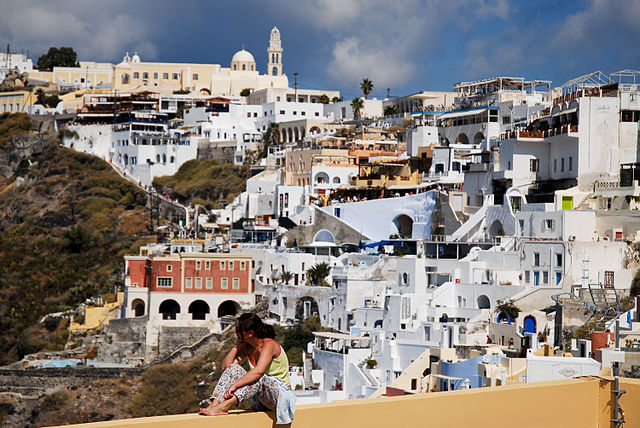
Image source: "Türkçe: İzmir'de gün batarken," Atacameño. Wikimedia Commons: http://commons.wikimedia.org/wiki/File:%C4%B0zmir_g%C3%BCn_bat%C4%B1m%C4%B1.JPG

I’ve been in Turkey for just over a week now, and what a week it’s been! I got to Izmir, where I’ll be staying for two months and taking language courses, the same night that nation-wide protests began after police violently attempted to disperse a minor environmental protest in Istanbul that morning. The first couple jetlagged nights I was here I saw clouds of tear gas at the end of my street. Once, at about 2am, a group of police officers with clubs in hand walked down my street hunting for protestors, accompanied by a larger group of government supporters armed with bats and pipes. After the mob had passed, several small groups of teenage protestors slipped out of the apartment buildings where they had been hiding and scurried off in the opposite direction. There were reports a few days later that a number of people had been arrested in Izmir for tweeting the location of police patrols like the one I saw that night.I haven’t seen any signs of fighting now for several days, though, although that may be due to the fact that the jetlag has passed and I’m not waking up in the middle of the night anymore. Every day the main opposition TV channel broadcasts footage from the previous nights’ fighting, and a day or two ago I saw a clip of police clubbing unarmed protestors that was filmed just a couple streets away from where I’m staying.
However, despite the violence on both sides (police officers have also been injured, shops here have been smashed, and in another part of Izmir, protestors burnt down the local headquarters of the ruling AK Party a few nights ago,) my experience has been that the protests have largely been peaceful and festive. Every afternoon a stage is set up, and every evening political speeches are interspersed with live music and dancing. Adults socialize and drink beer, children fly kites, and peddlers hawk everything from Guy Fawkes masks and Turkish flags emblazoned with the portrait of Mustafa Kemal Atatürk, Turkey’s founding father, to toys and women’s clothing.
Many interesting anecdotes have come out of the protests, which have unified opposition to the AK Party in a way that no politician has been able to in the decade that the AK Party has been in power. There was a story a few days ago about a group of ultranationalists (Turkey’s far right and the traditional foes of the Kurdish independence movement) standing by while Kurdish protesters danced traditional Kurdish dances in Taksım Square. The two groups then stood arm-in-arm to form a line opposing a police advance into the square. Today on TV I saw footage of fans from Istanbul’s rival soccer clubs, notorious for their riots whenever their teams played each other, dancing and chanting. They had apparently decided to stop fighting against each other and instead join together to fight against the police.
The protests have also inspired a creative backlash against the government. After Prime Minister Erdoğan called the protestors “çapulcu” or looters, in a speech last week, protestors quickly appropriated the term for themselves. The LMFAO song Party Rock Anthem’s lyric “Everyday I’m shuffling” has been reinterpreted as “Everyday I’m çapuling”, (complete with a music video) and a couple nights ago I saw a some teenagers wearing tee-shirts with the phrase printed on it, along with a picture of a gas mask. If I can find one I’m going to buy it. I also saw a Çapulcu Operası, or Looter’s Opera, on TV the other day (link here).
While it isn’t clear what (if any) long term effect the protests are going to have on Turkey’s political fabric, they have made my stay thus far very interesting. I’m glad I came when I did, and I’m very curious about what the coming weeks will bring.
Levi Armlovich is a first year MAEUS student. He received his Bachelor’s degree in 2008 from St. John’s College in Santa Fe, NM, worked odd jobs for a couple of years, then decided he missed being a student. He is currently pursuing a dual degree in Law and European Union Studies and is interested in international business and trade law. He is also a project manager for Illinois Business Consulting, a student-run consulting organization on campus. He interned at the Illinois International Trade Office for Western Europe in Brussels over the summer and received a Foreign Language and Area Studies fellowship to study Turkish this academic year. In his spare time he brews his own beer, travels as much as he can, and enjoys reading and hiking.
Image source: "Türkçe: İzmir'de gün batarken," Atacameño. Wikimedia Commons: http://commons.wikimedia.org/wiki/File:%C4%B0zmir_g%C3%BCn_bat%C4%B1m%C4%B1.JPG


 Posts
Posts